
 By
By 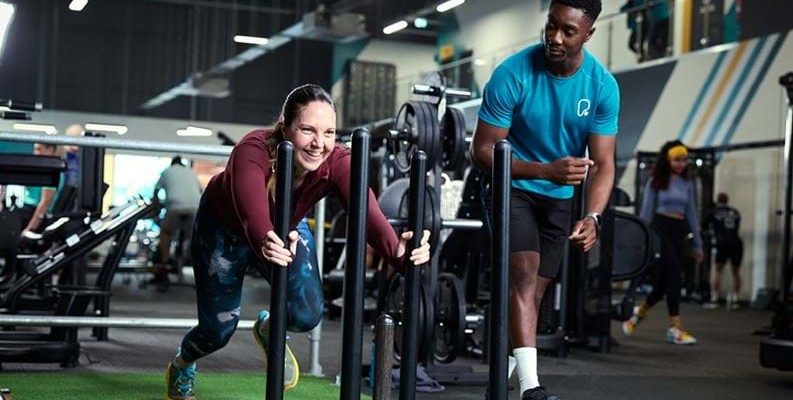
For decades, commercial fitness culture has focused heavily on aesthetics and isolated muscle training. Gyms filled with specialized machines designed to target highly specific muscle groups, such as the biceps curl machine or the seated leg extension, became the standard template for exercise routines. While these methods are effective for bodybuilding and hypertrophy, they often fail to prepare the human body for the unpredictable movements required in daily life.
A growing movement in the health and wellness industry is shifting the focus back to practical capability. Functional fitness is an exercise philosophy centered on training the body to handle real-life scenarios, movements, and physical demands safely and efficiently. By shifting the objective from how a muscle looks to how the entire body performs, functional training bridges the gap between commercial gym workouts and everyday human movement, establishing itself as the most sustainable approach to long-term health.
What Exactly Is Functional Fitness
At its core, functional fitness replicates and reinforces the foundational movement patterns that humans use naturally every day. In nature, the body rarely moves in a single, isolated path. Life requires bending down to pick up a heavy package, lifting a child into a vehicle, carrying groceries over uneven terrain, or reaching up to place an item on a high shelf.
Functional training relies on multi-joint, multi-planar movements. Instead of working a single muscle group in isolation while sitting on a supported pad, functional exercises engage multiple muscle groups simultaneously, forcing the body to coordinate its kinetic chain and stabilize its core dynamically.
The Seven Foundational Movement Patterns
To build a body that operates efficiently in the real world, functional fitness focuses on mastering seven fundamental movement patterns. Every physical activity you perform throughout the day is a variation or a combination of these core motions.
1 Squat
The squat is the act of lowering your hips from a standing position and rising back up. In daily life, you execute a squat every time you sit down in a chair, get up from the toilet, or bend down to play with a pet. Training this movement strengthens the quadriceps, glutes, and hamstrings while improving hip and ankle mobility.
2 Hinge
Unlike the squat, which involves significant knee bending, the hinge pattern focuses on bending from the hips with a minimal bend in the knees, keeping the spine neutral. This motion is critical for picking heavy objects up off the ground, such as a laundry basket or a piece of luggage. It targets the posterior chain, which includes the lower back, glutes, and hamstrings.
3 Lunge
The lunge represents an asymmetrical, single-leg movement pattern. It replicates walking up a steep flight of stairs, stepping over an obstacle, or kneeling down to tie a shoe. Training lunges addresses strength imbalances between your left and right legs while significantly enhancing unilateral balance and stability.
4 Push
Pushing movements involve moving weight away from your body or pushing your body away from an object. This pattern can occur horizontally, like pushing a heavy door open, or vertically, like lifting an item into an overhead storage bin. It primarily strengthens the chest, shoulders, and triceps.
5 Pull
Pulling is the exact opposite of pushing, requiring you to draw a weight toward your body or pull your body toward an object. Opening a stuck refrigerator door, pulling a starter cord on a lawnmower, or climbing a ladder all rely on pulling mechanics. This pattern targets the upper back, lats, and biceps.
6 Rotation
The human body does not move solely in a straight line; it twists and turns continuously. Rotation involves twisting the torso, which is essential for swinging a golf club, throwing a ball, or simply turning around to look behind you while driving. Rotational training develops the obliques and deep core stabilizers, protecting the spine from twisting injuries.
7 Gait
Gait refers to the mechanics of locomotion, including walking, jogging, running, and sprinting. It is the ultimate expression of human movement, requiring a complex coordination of balance, pulling, pushing, and rotational forces to transport the body from point A to point B efficiently.
The Limitations of Isolated Machine Work
Traditional gym machines offer a controlled environment that isolates specific muscles. While this is useful for rehabilitation or specific muscle building, it presents distinct disadvantages for overall physical functionality.
+-------------------------------------------------------------------+
|                  TRAINING METHODOLOGY COMPARISON                  |
+-----------------------------------+-------------------------------+
| ISOLATED MACHINE TRAINING         | FUNCTIONAL FITNESS TRAINING   |
+-----------------------------------+-------------------------------+
| Fixed, single-plane path          | Free, multi-planar movement   |
| Core stabilization is supported   | Active, dynamic core engagement|
| Focuses on single muscle groups   | Integrates full kinetic chain |
| High cosmetic focus               | High physical capability focus|
+-----------------------------------+-------------------------------+
Machines guide the weight along a fixed, pre-determined path, which means the user does not have to stabilize the load themselves. This bypasses the deep stabilizing muscles surrounding the joints and core. Over time, an individual can develop incredible strength on a machine, yet still injure their back when lifting a moderately heavy box at home because their stabilizing muscles and core co-contraction patterns were never trained to handle an unguided, real-world load.
Key Benefits of a Functional Approach
Transitioning your exercise routine toward functional fitness yields profound benefits that extend far beyond the walls of a gym facility.
-
Injury Prevention: By strengthening the joints through full ranges of motion and building robust core stability, functional fitness drastically reduces the likelihood of everyday strains, sprains, and back injuries.
-
Enhanced Athleticism and Coordination: Because functional training emphasizes neuromuscular coordination, it teaches your muscles to work in harmony. This leads to better balance, agility, and spatial awareness.
-
Improved Posture and Joint Mobility: Desk-bound lifestyles often lead to tight hips and rounded shoulders. Functional movements actively counteract these patterns by promoting structural alignment and flexibility.
-
Time Efficiency: Functional exercises are inherently compound movements, meaning they utilize multiple joints at once. Working your entire body simultaneously allows you to accomplish a comprehensive workout in less time compared to traditional split routines.
Structuring a Functional Fitness Routine
To implement this philosophy into your lifestyle, focus your workouts around free weights, resistance bands, bodyweight movements, and unstable surfaces rather than fixed machines.
A standard functional training session might begin with a dynamic warm-up to prepare the joints, followed by a primary compound movement like a deadlift or a goblet squat. Next, you might integrate single-leg lunges, overhead presses, and rotational wood-chops using a cable column or medicine ball. The workout concludes with a carry variant, such as a farmer’s walk, which forces the core to stabilize the spine against a moving, heavy load, perfectly mimicking the physical demand of carrying heavy grocery bags across a parking lot.
Frequently Asked Questions
Is functional fitness suitable for older adults who have joint pain?
Yes, it is highly beneficial for older adults. Functional fitness can be adapted to any fitness level. For seniors, the exercises focus heavily on fall prevention, preserving independence, and maintaining the mobility needed for tasks like getting out of bed or climbing stairs. By strengthening the muscles surrounding the joints, it frequently reduces chronic arthritis pain.
Can you still build a muscular physique using functional fitness?
Absolutely. While the main goal is functional performance, compound movements like pull-ups, squats, and overhead presses put a significant amount of tension on large muscle groups. This tension naturally stimulates muscle growth and definition, resulting in a lean, balanced, and athletic physique.
How often should someone perform functional fitness workouts per week?
For most individuals, practicing functional fitness three to four times per week is ideal. This frequency provides enough stimulus to build strength, coordination, and cardiovascular endurance while leaving adequate time between sessions for your muscles, tendons, and nervous system to recover completely.
Do I need a gym membership or expensive equipment to do functional training?
No, you do not. One of the greatest aspects of functional training is its versatility. You can get an excellent functional workout using your own body weight, or by utilizing simple, affordable tools like resistance bands, kettlebells, or suspension trainers at home or in an outdoor park.
What is the difference between functional fitness and high-intensity interval training?
Functional fitness refers to the types of movements you perform, focusing on real-life patterns and joint mechanics. High-intensity interval training, or HIIT, refers to a specific cardiovascular structure based on short bursts of maximum effort followed by brief rest periods. While you can perform functional movements at a high intensity in a HIIT format, functional fitness itself can also be done slowly with heavy weights or at a moderate, steady pace.
How does functional training improve cardiovascular health compared to running?
Many functional exercises are compound movements that engage massive amounts of muscle mass simultaneously. Moving multiple large muscle groups through a full range of motion requires a substantial amount of oxygen and blood flow, which naturally elevates your heart rate and strengthens your cardiovascular system, often providing a more comprehensive metabolic challenge than steady-state jogging.











Comments