
 By
By 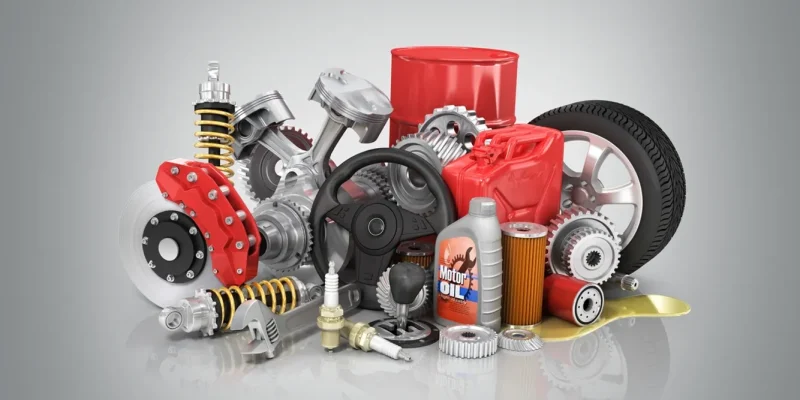
From the roar of a high-performance engine to the quiet reliability of a family sedan, the modern automobile is an extraordinary blend of art, science, and engineering. Beneath every sculpted body and gleaming paint finish lies a complex ecosystem of components working in unison—auto parts that make the difference between a smooth ride and a breakdown, between safety and risk, between ordinary and exceptional. Although these parts often remain unseen and uncelebrated, they form the foundation of every mile traveled, bearing the silent burden of performance, endurance, and adaptability.
Auto parts are more than mechanical elements. They are the cumulative result of over a century of engineering evolution, each component a testament to humanity’s pursuit of motion mastery. Understanding these parts, their functions, and their interconnectivity provides insight not only into automotive mechanics but also into the broader philosophies of innovation, quality, and design.
At the heart of any vehicle is the powertrain—a collection of components that generate and deliver power to the wheels. The engine, often referred to as the vehicle’s heart, converts fuel into mechanical energy through combustion or, in electric vehicles, via electric motors. Surrounding the engine is an intricate array of parts including pistons, crankshafts, camshafts, timing belts, and more—all working with microscopic precision. The transmission, whether automatic or manual, manages how this energy is deployed, shifting gears to balance power and efficiency. These systems are marvels of engineering, designed to function reliably under intense pressure, high temperatures, and constant vibration.
However, power alone is not enough. Control is equally essential. This is where suspension, steering, and braking components come into play. Suspension systems—comprising shocks, struts, springs, and control arms—absorb road imperfections, maintaining tire contact and ensuring stability. Steering mechanisms, which range from traditional hydraulic setups to sophisticated electronic systems, translate the driver’s input into accurate directional control. Braking systems, featuring rotors, calipers, pads, and master cylinders, must be impeccably engineered to stop a vehicle quickly and safely, often under extreme conditions. Each of these parts, while serving different purposes, must harmonize with the others to ensure overall vehicle integrity.
Beyond these foundational systems, today’s vehicles are deeply reliant on electronic components. Modern cars may include dozens of control units—tiny computers that manage everything from engine timing and emissions to entertainment and navigation systems. Sensors scattered throughout the car monitor everything from tire pressure to ambient lighting. The integration of electronic and mechanical systems has blurred traditional boundaries, creating a new category of auto parts that require both physical resilience and software compatibility.
An essential distinction in the industry lies between different types of parts: OEM (Original Equipment Manufacturer), aftermarket, and remanufactured. OEM parts are created by or for the vehicle’s original manufacturer and are generally considered the benchmark for quality and compatibility. They are exact matches for the parts originally installed in a vehicle, providing peace of mind for repairs and maintenance. Aftermarket parts, produced by third-party companies, offer a wide spectrum—from cost-effective alternatives to high-performance upgrades. Some are nearly indistinguishable from OEM parts, while others prioritize affordability over longevity. Meanwhile, remanufactured parts give used components a second life through rigorous testing and refurbishment, supporting sustainability without necessarily sacrificing performance.
As consumers grow more informed and involved, especially with the rise of do-it-yourself culture and online part retailers, the ability to source and understand auto parts has become easier than ever. E-commerce has opened the market to a global audience, offering not only extensive inventories but also detailed specifications, compatibility tools, and installation tutorials. Yet, with this accessibility comes a need for discernment. Identifying the right part requires familiarity with vehicle identification numbers (VINs), model-specific variations, and the subtle nuances of fit and function.
In parallel, the car enthusiast community has turned the world of auto parts into a space for creativity and self-expression. Performance upgrades, aesthetic modifications, and custom builds are not merely about replacing worn-out components but about tailoring a vehicle to suit an individual’s tastes and desires. Whether it’s a cold air intake to boost horsepower, a sport-tuned suspension for track days, or a set of forged wheels to change a vehicle’s visual character, the parts chosen reflect personal passion and technical knowledge.
However, the evolution of the automotive landscape is introducing new challenges—and opportunities—for the auto parts industry. The rapid shift toward electrification is redefining what constitutes a critical component. Electric vehicles, for example, eliminate traditional parts like exhaust systems and fuel pumps while introducing new ones such as battery modules, cooling systems for electric motors, and regenerative braking hardware. The transition not only alters manufacturing requirements but also demands a new kind of technician—part mechanic, part software engineer.
Environmental considerations are also influencing how parts are designed, produced, and recycled. Manufacturers are increasingly using lightweight and recyclable materials to improve fuel economy and reduce emissions. Regulations and consumer demand are pushing for extended part lifecycles and more sustainable supply chains. In this context, remanufactured and refurbished parts have taken on renewed significance, helping reduce waste while maintaining performance standards.
Ultimately, auto parts form the skeleton, nervous system, and muscle of any vehicle. They are the engineered manifestations of safety, efficiency, and human ambition. As cars grow more intelligent and less reliant on fossil fuels, the parts that support them will become even more advanced, more integrated, and more indispensable.
In every well-maintained engine, every finely tuned suspension system, and every flawlessly executed emergency brake, the hidden genius of auto parts is at work. These components may not be glamorous, but they are vital. They carry the legacy of automotive excellence forward and ensure that every journey—whether across town or across continents—is one that can be trusted, enjoyed, and repeated. For those who take the time to look beneath the surface, the world of auto parts reveals itself not just as a technical necessity but as a fascinating study in the pursuit of motion perfected.











Comments